
Custom Golf Club Fitting: The Definitive Guide
Discover how custom golf club fitting can improve your game. Learn the benefits, process, and what to expect from a professional club fitting session.
Custom golf club fitting tailors clubs to a player's individual specifications, benefiting golfers of all levels through improved consistency, greater distance, better accuracy and a more comfortable feel. The process is systematic: an initial assessment of your game and goals, static body measurements, dynamic swing analysis on a launch monitor, then selection of the optimal shaft, clubheads and grips before customisation and assembly. The result is a set matched to your body, swing and playing style.
AI-generated summary
Custom golf club fitting is the process of matching your clubs' length, lie angle, shaft, loft and grip to your body, swing and ball flight, using measured data rather than off-the-shelf specifications. Standard clubs are built for an average golfer who does not exist. A fitting builds them for you.
Here is why it matters, exactly what happens in a fitting, and how it works indoors on Trackman at Grip's London studios.
Why Custom Club Fitting Matters
Golf clubs are not one-size-fits-all, and playing the wrong specs quietly costs you shots in four ways:
- Consistency: clubs matched to your swing make repeatable contact easier, which is the foundation of lowering your handicap
- Distance: optimising length, loft and shaft turns your existing swing speed into more carry, without swinging harder
- Accuracy: correct lie angle and shaft profile tighten your dispersion and give you more control over trajectory
- Feel: clubs built for your body reduce compensations, feel more natural and lower the risk of discomfort over a full round
There is also a longer-term case. Properly fitted clubs tend to stay right for you, so you replace equipment because you want to, not because it never suited you.
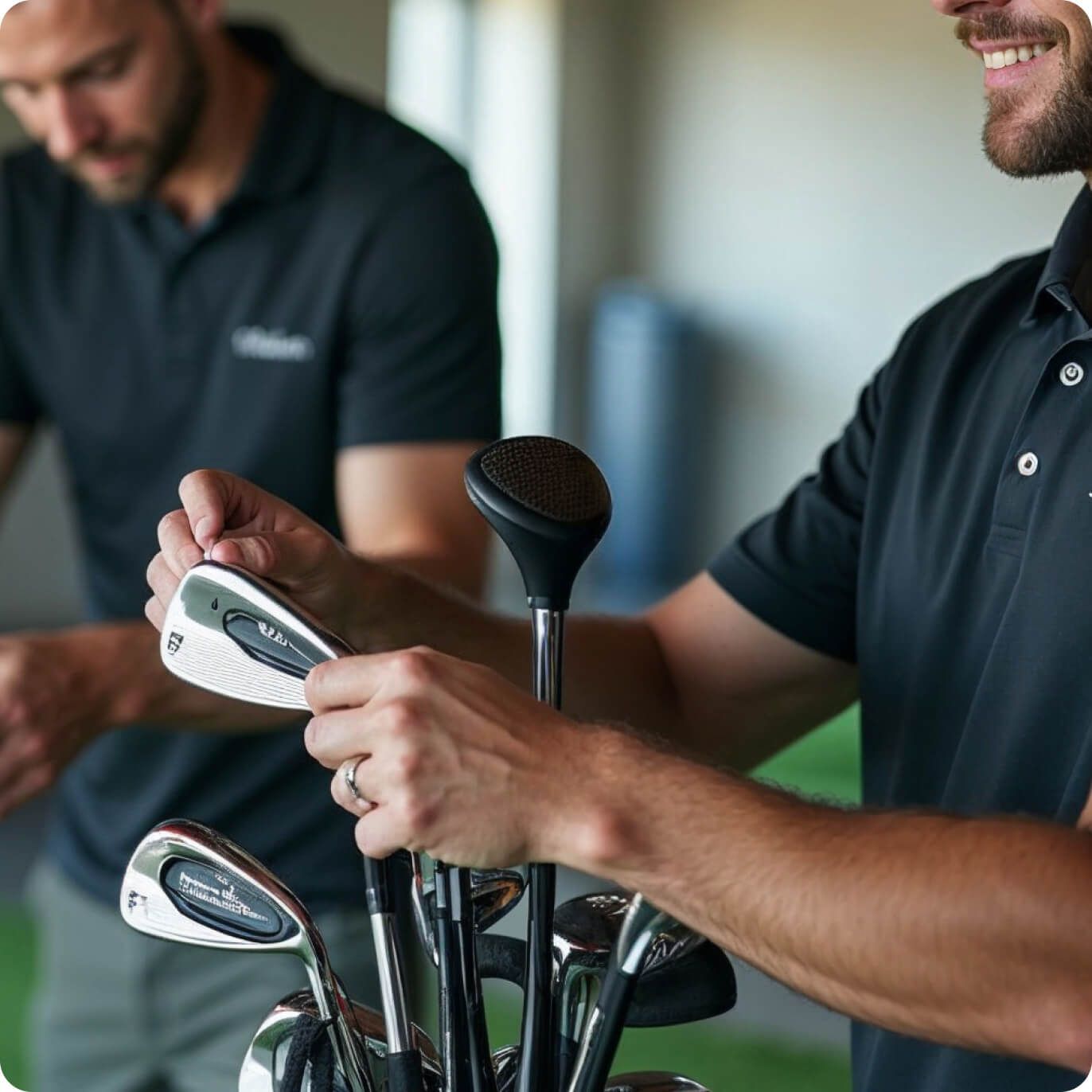
The Custom Club Fitting Process, Step by Step
A proper fitting is systematic. Here is what to expect from start to finish.
1. Initial assessment
The fitter gets to know your game: playing history, handicap, goals, typical miss and any physical limitations. This frames every decision that follows.
2. Static measurements
Height, arm length and wrist-to-floor measurements set the baseline for club length, lie angle and grip size.
3. Dynamic swing analysis
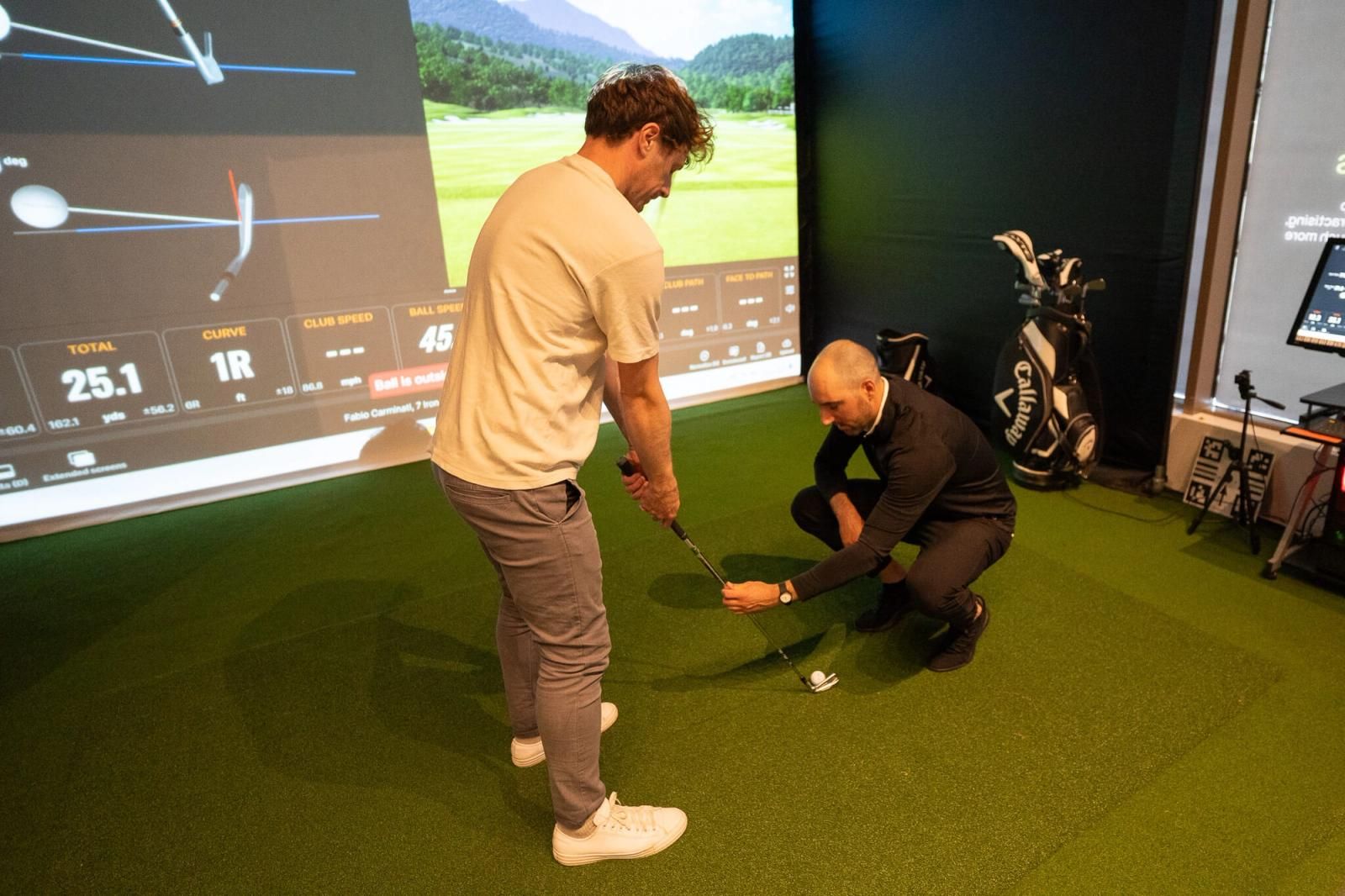
You hit shots on a launch monitor, with your current clubs and with test heads and shafts. Trackman captures clubhead speed, ball speed, launch angle, spin rate and dispersion on every strike. This data, not opinion, drives the fit.
4. Shaft selection
Flex, weight, length and material are matched to your swing speed and tempo. The shaft is the engine of the club, and it is where fittings most often find distance.
5. Clubhead selection
The fitter matches head design to your skill level and preferences, whether that is a forgiving cavity back or a compact players' iron, then dials in loft and lie for your delivery.
6. Grip selection
The grip is your only contact with the club. Hand size and preference determine the size and texture that give you control without tension.
7. Build and assembly
Your specification goes to the manufacturer, where each club is built to the exact combination of head, shaft, length, lie, loft and grip agreed in your fitting.
8. Review and delivery
The fitter walks you through the rationale behind every choice, and your clubs arrive built to your numbers rather than to a factory average.
Why Indoor Fitting on Trackman Works Best
You can be fitted outdoors, but indoor fitting on a launch monitor has become the standard for a reason. Indoors, every shot is measured in identical conditions. No wind flattering one shaft and punishing another, no cold ball flight muddying the numbers, no squinting down a range trying to judge carry by eye.
On Trackman, you and your fitter see precise carry distances, spin rates and dispersion patterns for every combination tested, side by side. When two setups feel similar, the data settles it. That is how a fitting produces clubs that are measurably better, not just newer.
The same applies after the fitting. Because the numbers were captured indoors on Trackman, you can book a bay later and check your new clubs against your fitted baselines whenever you like.
Callaway Custom Fitting at Grip
Grip offers Custom Fitting at our London studios, run indoors on the same Trackman technology our members practise on. You hit real shots, test Callaway head and shaft combinations against your current clubs, and see the data on every strike before any decision is made. The fitting page covers current options, availability and booking.
A fitting also pairs naturally with coaching. If the data shows a delivery issue that no shaft can fix, our coaching team at Tower Bridge and Deptford Park works on the swing side, so the equipment and the golfer improve together. Fitting optimises the tool; coaching optimises the person holding it.
Who Should Get Fitted?
Everyone who plays regularly, honestly. The persistent myth is that fitting is for good golfers. In practice:
- Beginners benefit enormously, because correctly sized clubs make good fundamentals easier to learn from the start
- Improving golfers often find their off-the-shelf set is actively fighting the swing changes they are making
- Low handicappers use fitting to fine-tune gapping, flight windows and dispersion, where small gains decide scores
If your clubs were bought off the rack, or your swing has changed since you were last fitted, a fitting will almost certainly find something.
Final Thoughts
Custom golf club fitting is one of the few guaranteed upgrades in golf: the same swing, delivered through better-matched equipment, produces better results. The process is thorough, the data does the deciding, and indoors on Trackman the numbers are as reliable as they get.
Ready to find out what your specs should actually be? Visit our Custom Fitting page to see current options and book, or book a Trackman bay at Tower Bridge or Deptford Park and get your baseline numbers first.
Questions, answered
What is custom golf club fitting?
Custom golf club fitting is the process of tailoring golf clubs to a player's unique specifications, matching them to your body, swing and playing style. It benefits golfers of all skill levels, not just professionals, and aims to optimise factors like length, loft, shaft, clubhead and grip.
What are the benefits of getting custom-fitted golf clubs?
Custom fitting improves consistency, can increase distance, and enhances accuracy and control over ball trajectory. Clubs matched to your body feel more comfortable and natural, which boosts confidence and can lead to lower scores. Custom clubs may also last longer, offering long-term savings.
What happens during a custom club fitting session?
The process typically involves an initial assessment of your golf history and goals, static measurements such as height and arm length, and a dynamic swing analysis on a launch monitor. The fitter then recommends the optimal shaft, clubheads and grip, before customisation, assembly, and a final review and delivery.
Where can you get custom golf clubs fitted?
Options include golf retail stores with trained fitting staff, golf club manufacturers that have their own fitting centres, certified club fitters who specialise in the field, and golf academies or coaching centres that offer fitting as part of their programs.
What is measured during the dynamic swing analysis?
During the dynamic swing analysis, you hit shots with your existing clubs or specially fitted club heads on a launch monitor. The monitor tracks data such as clubhead speed, ball speed, launch angle and spin rate, providing insights into your swing dynamics that inform the shaft and clubhead recommendations.