
The technology behind every number.
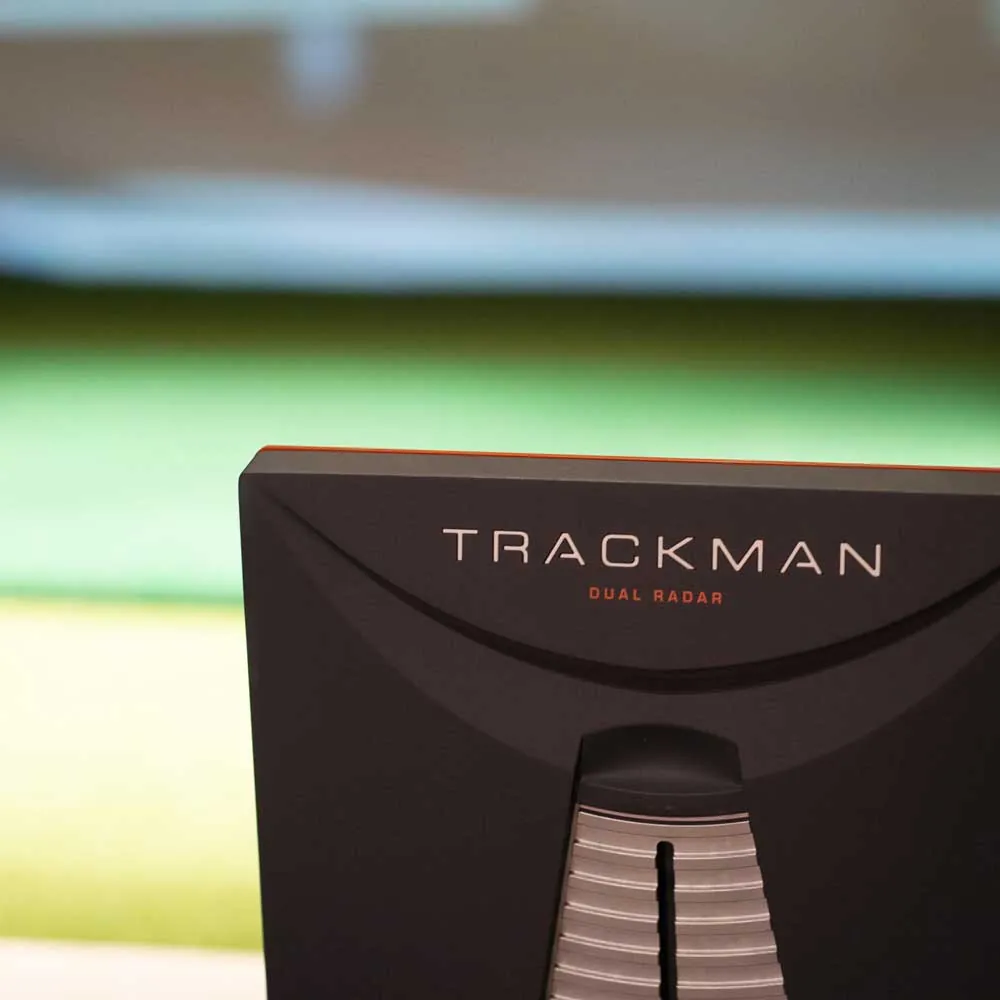
Trackman is the launch monitor the professional game is built on, and it sits in every Grip bay. It reads your shot with radar and high-speed cameras, then turns it into numbers you can act on. Here's how the technology works.
What Trackman actually is.
Trackman is a launch monitor: the sensor that watches your shot and measures what happened. It is the engine behind every number on the screen, every simulated course you play and every change a coach helps you make.
The system pairs Doppler radar with high-speed cameras, an approach Trackman calls optically enhanced radar tracking. Radar follows the ball and club through the air; the cameras read the exact moment of impact. Together they measure the shot directly, so the numbers describe a real event.
That distinction sits behind everything else on this page. The technology is worth understanding because it is what makes your practice, coaching and fitting reliable.
What Trackman measures.
One shot, dozens of data points. These are the readouts that shape how you practise, how a coach diagnoses a fault and how a fitting reads your swing.
-
Ball speed
How fast the ball leaves the face — the single biggest driver of carry distance, measured directly off the strike.
-
Club speed
The speed you deliver into impact, the raw engine behind your distance and the number a fitting builds around.
-
Spin rate
Backspin and spin axis measured off the ball, the numbers that govern shot shape, flight height and stopping power.
-
Launch angle
The vertical angle the ball starts on. Paired with spin, it decides your window, your carry and how the ball lands.
-
Attack angle
Whether the club is moving up or down at impact — the key to launching your driver and compressing your irons.
-
Smash factor
Ball speed divided by club speed: a pure read of strike quality, and how efficiently your speed becomes distance.
One read, three ways measured.
Radar, infrared and high-speed cameras work together inside a single unit, which is how the number on the screen matches what your ball did.
- 4,600 fpsHigh-speed camera capture
- 3Tracking systems in one unit
- BillionsReal shots behind every read
How the tracking works.
Trackman’s indoor unit combines three tracking systems. Doppler radar follows the ball and club through their flight. An infrared light system illuminates the impact zone. Dual high-speed cameras, running at up to 4,600 frames per second, capture the club and ball at the exact moment of strike.
Because impact is measured optically and flight is measured by radar, the unit does not have to estimate the numbers it cannot see. Indoors, where the ball only travels a few feet, reads are anchored to a model built on billions of measured full shots, so the flight on screen follows real-world physics.
- Radar for flight Doppler radar tracks the ball and club through the air, capturing speed, launch and the full trajectory.
- Cameras for impact Dual high-speed cameras read face angle, path and strike location at impact, with no markers or stickers needed.
- A model for indoors Billions of measured outdoor shots ground the indoor read, so a short indoor flight predicts the real one accurately.
What the technology unlocks.
The hardware only matters for what it lets you do. Every Grip bay runs Trackman, so the same measured data powers your practice, your lessons and your fittings.
-
Sharper practice
See real feedback on every shot and train against the ball flight you would actually hit on the course.
-
Better coaching
Measured club and ball data lets a PGA coach diagnose the real cause of a fault, not a modelled guess.
-
Precise fitting
A custom fitting built on directly measured numbers matches the right clubs to your real swing.
-
World courses
The same tracking data drives realistic simulated play across famous courses, indoors and year-round.
Trackman in every bay, at every studio.
No premium-bay upsell, and no luck of the draw on which sensor you get. At Grip you always play on the system the professionals trust. Want the full case for why we chose it?
The technology, explained.
The questions golfers ask most about how Trackman works and what it measures.
What is optically enhanced radar tracking?
It is Trackman's hybrid method: Doppler radar tracks the ball and club through their flight, while dual high-speed cameras read the exact moment of impact. Pairing the two means the unit measures the shot directly instead of estimating the parts it cannot see.
What does Trackman measure?
Trackman measures the full picture of a shot: ball speed, launch angle and direction, spin rate and spin axis, club path, face angle, angle of attack, dynamic loft, impact location and smash factor, plus carry, total distance and dispersion.
How does Trackman work indoors?
Indoors the ball only travels a few feet, so Trackman anchors each read to a model built on billions of measured full shots. Radar and cameras capture your real launch and impact, then the model projects the flight the ball would take outdoors, following real-world physics.
Is Trackman accurate indoors?
Yes. Because launch and impact are measured directly and the projection is grounded in billions of real shots, indoor Trackman numbers transfer reliably to the course. For a full comparison with other launch monitors, see why we chose Trackman.
Do I need markers or stickers on my ball?
No. Trackman's indoor system reads your shot without any markings on the ball or club, so you can play your own ball straight out of the bag.
What launch monitor do professional golfers use?
The PGA Tour's shot-tracking runs on Trackman radar, committed through 2030, and the DP World Tour named Trackman its official launch monitor in 2025. It is the system most tour players, coaches and fitters reach for.